Freight · 6 min read
FTL vs LTL Freight: Which One Fits Your Shipment?
FTL vs LTL freight explained: how full truckload and less than truckload are priced, which shipments favor each, and how a warehouse that books freight helps.
By The Papez Company · Published
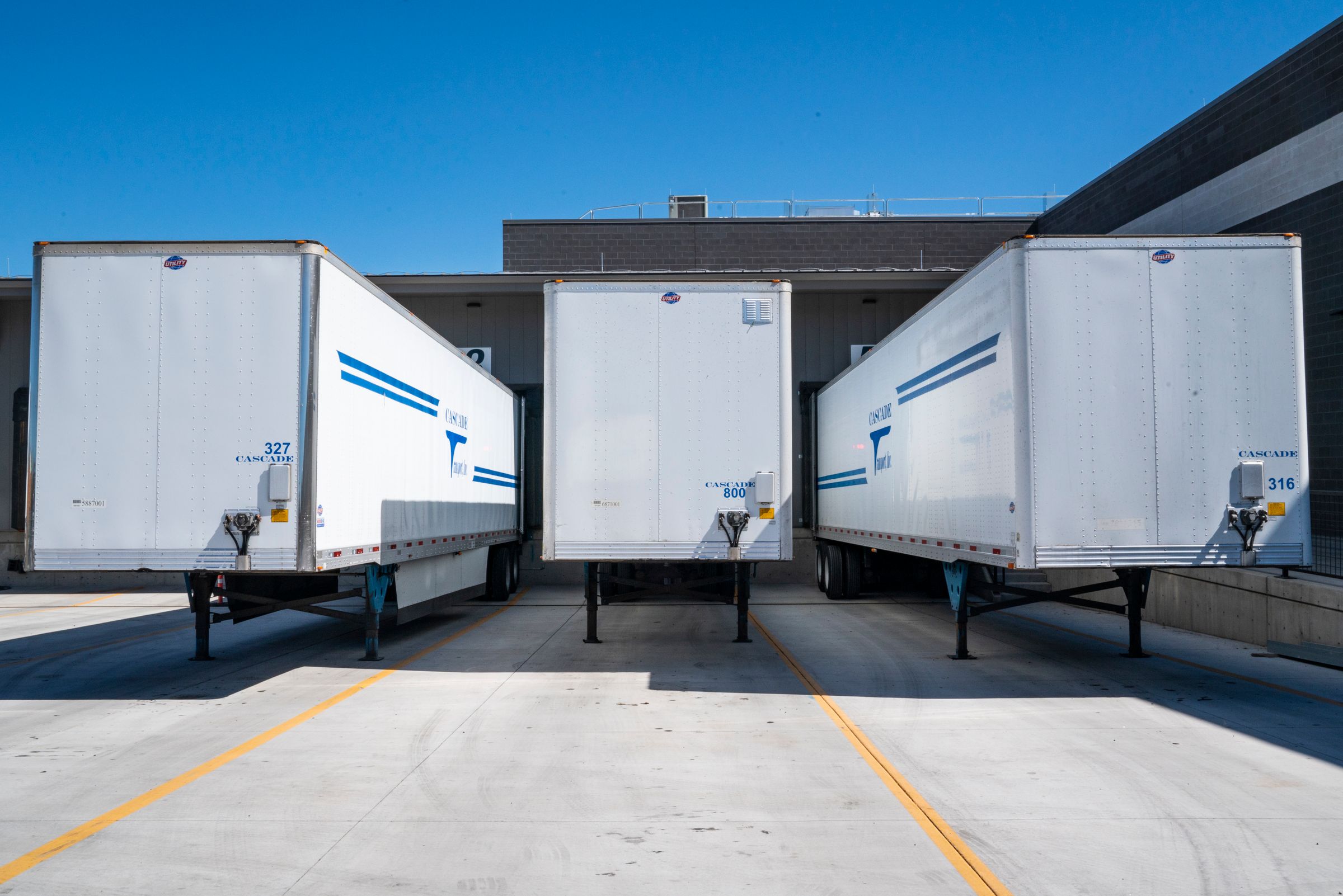
Most palletized freight in Southern California moves one of two ways: on a truck you have to yourself, or one you share. Full truckload (FTL) and less-than-truckload (LTL) are priced differently, handled differently, and fail in different ways. Picking the wrong one usually shows up as an invoice bigger than the quote, a damaged pallet, or a missed delivery window.
This guide explains how each mode works, what drives the price, and which signals point toward FTL vs LTL. Use it to book your own freight or to check whoever books it for you.
What full truckload and less-than-truckload mean
With full truckload, the trailer is yours. A driver picks up at your dock, seals the doors, and drives to the consignee. Nobody else's freight rides along and nothing is unloaded in between. You pay for the whole trailer whether or not you fill it.
With less-than-truckload, your pallets share trailer space with freight from other shippers. The carrier picks up on a local truck, sorts your pallets at a terminal onto a linehaul trailer, sorts them again at the destination terminal, and delivers on another local truck. Each sort is a forklift touch, and each touch is a chance for a pallet to get bumped, tipped, or delayed.
The short version: FTL is one truck, one route, one set of hands. LTL is a network, and your freight rides through it alongside everyone else's.
How each mode is priced, in principle
FTL: you pay for the truck and the lane
A truckload rate is quoted for a lane, meaning origin to destination, and reflects mileage, the equipment needed, and how many trucks are available in that market that week. Weight matters only up to the legal limit. Adding pallets to a truck you have already booked costs little or nothing, which is why the cost per pallet drops as the trailer fills, and why a half-empty trailer costs about the same as a full one.
LTL: you pay for weight, class, space, and extras
LTL freight pricing covers the portion of a shared trailer you occupy, so the rate is built from several inputs:
- Weight. Heavier shipments cost more in total but less per hundred pounds, so rates step down at weight breaks.
- Freight class. A standardized rating based mostly on density, with adjustments for stowability, handling, and damage risk. Light, bulky freight draws a higher class than dense freight of the same weight.
- Space. Carriers measure. If your pallets take up more trailer than your weight implies, or run past a length threshold, expect a cubic or linear-foot adjustment.
- Accessorials. Liftgate, residential delivery, limited-access sites, inside delivery, appointment scheduling, and redelivery each carry their own charge.
The most common surprise on an LTL invoice is a reweigh or reclass: the carrier measured the freight at the terminal, found it heavier or less dense than declared, and rebilled. Accurate weight and dimensions on the bill of lading prevent most of that. Dense, square packaging helps too, which is one reason some shippers have product repackaged before it ships.
When each one makes sense
LTL fits when
- You are shipping one pallet to a handful of pallets.
- The product is dense, well packaged, and can take several forklift touches without damage.
- Your delivery window has some flexibility.
- The receiver is a business with a dock, or can accept a liftgate delivery.
- You are sending small quantities to several destinations.
FTL fits when
- You have enough pallets to fill most of a trailer, or the freight hits the weight limit first.
- The product is fragile, high value, or awkward to handle, and every terminal transfer is a risk.
- The delivery date is firm. Direct transit is faster and more predictable because there are no terminal sorts.
- The consignee holds a strict appointment, such as a retail distribution center, and a missed window means a fee or a refused load.
- The freight cannot be stacked or mixed with other shipments because of its shape, weight, or contents.
The middle ground
Shipments too large for standard LTL but nowhere near a full trailer land in a gray zone. Carriers sell this as volume LTL or partial truckload, and the pricing can go either way. Once a shipment reaches double-digit pallet counts, quote it both ways and compare landed cost, transit time, and touches.
Delivery requirements can decide it for you
The receiving end is the part most shippers check last, and it should be first. A full trailer needs a dock and a forklift on the other side; a receiver with neither cannot take an FTL delivery no matter how the math works. In LTL, the same constraints show up as accessorials.
Before booking, confirm these with the consignee:
- Is there a dock, or does the driver need a liftgate?
- Is a forklift or pallet jack available to unload?
- Is an appointment required, and what are the receiving hours?
- Are there pallet size, height, or wrapping limits?
- Is the site residential, a job site, or anything else a carrier would flag as limited access?
Every one of those answers belongs on the bill of lading. Leaving one off just moves the charge to a later invoice, with a redelivery fee attached.
Expedited versus standard service
Standard LTL moves through the carrier's network on its schedule, with an estimated transit time that is not a commitment. Expedited LTL buys a firmer commitment, sometimes a specific date, at a premium. Standard FTL means the truck is dispatched for the next available slot; expedited FTL means a truck is committed now, sometimes with two drivers so it does not stop overnight.
Expedited service earns its cost when a missed date is more expensive than the premium: a production line waiting on parts, a retailer's compliance window, a launch date. When the date has slack, book standard and give the shipment lead time. Speed you do not need is the easiest freight cost to eliminate.
How a warehouse that coordinates freight simplifies the decision
Most mistakes in the FTL vs LTL decision come from guessing: an estimated weight, a pallet count off a spreadsheet, a delivery site nobody called. When your inventory sits at a third-party warehouse that also books freight, the people quoting the shipment are the ones standing next to it.
In practice that means:
- The freight is counted, measured, and weighed before it is quoted, so the bill of lading matches what goes on the truck.
- Pallets are built and wrapped with the mode in mind: dense and square for LTL, or loaded for a direct run.
- Gray-zone shipments get quoted both ways, and rates are negotiated with carriers rather than accepted off a tariff.
- The pickup is scheduled, expedited or standard, the freight is staged at the dock, and the paperwork is prepared on site.
This is the model The Papez Company runs. We are a family-owned and operated warehouse in Montclair, California, in the Inland Empire, approximately 50 miles from the Ports of Los Angeles and Long Beach. Inventory is received, stored, and picked in the same FDA registered facility where we coordinate FTL and LTL freight, negotiate rates with carriers, and schedule pickups for expedited or standard service. Customers who store inventory with us get freight quoted by people who have seen the pallets.
A quick way to decide
- Count the pallets and get real weights and dimensions, not estimates.
- Call the consignee and confirm dock, equipment, hours, and appointment rules.
- Decide how much the delivery date matters and what a delay would cost.
- A few pallets, dense and well packaged, flexible date: LTL.
- Fills most of a trailer, fragile or high value, or a hard appointment: FTL.
- In between: quote both, including accessorials, and compare landed cost and touches.
Run that checklist every time and the invoice starts matching the quote.